


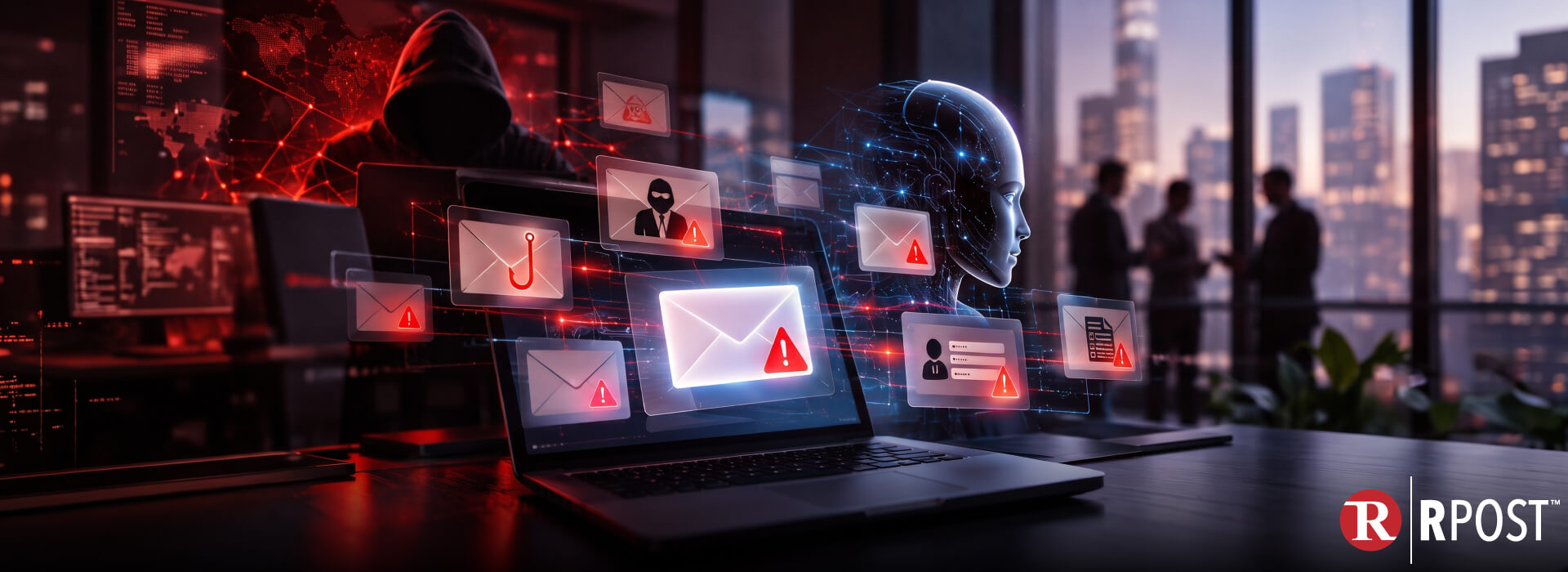
Email attacks are no longer just about tricking employees into clicking suspicious links. In 2026, attackers are exploiting trusted identities, legitimate business conversations, compromised third parties, and even AI assistants. For enterprise security leaders, the challenge is not simply stopping malicious emails, but identifying the suspicious activity that makes these attacks possible.
Imagine receiving an email from a long-standing supplier requesting an update to their banking details. The message arrives in an existing conversation, references the correct invoice, and uses the supplier's familiar writing style. Nothing appears unusual, and the sender's email address is legitimate.
Your finance team approves the change. Days later, the supplier calls to ask why payment has not arrived.
The email came from an attacker who had quietly gained access to the supplier's mailbox, studied previous conversations, and waited for the right moment to intervene.
This is the growing challenge facing enterprise cybersecurity teams. Many of today's most damaging email security threats do not involve suspicious attachments or unfamiliar domains. Instead, attackers exploit established business relationships and trusted communications.
According to Microsoft's 2026 email threat research, approximately 8.3 billion email-based phishing threats were observed during the first quarter, followed by approximately 7.6 billion in the second quarter. Credential theft remained a dominant objective, while QR phishing, compromised accounts, and sophisticated social engineering continued to evolve.
Three developments are driving this change. AI allows attackers to research targets and personalize campaigns faster. Compromised legitimate accounts make fraudulent messages harder to recognize. Meanwhile, email is increasingly processed by AI assistants that summarize information and initiate workflows.
For CISOs and CIOs, protecting the inbox is no longer enough. Organizations need visibility into suspicious activity before an attack reaches its final stage.
Business email compromise (BEC) remains one of the most financially damaging forms of email fraud because it exploits business processes rather than technical vulnerabilities alone.
Attackers impersonate executives, suppliers, and trusted contacts to redirect payments, change payroll details, or obtain confidential information.
AI is making these attacks more convincing. Criminals can analyze publicly available information, imitate executive communication styles, and create personalized requests that resemble legitimate business correspondence.
Microsoft documented a 2026 AI-assisted executive impersonation campaign involving more than one million financial-fraud emails, demonstrating how automation can expand the reach of these attacks.
For enterprises processing hundreds of financial transactions daily, a fraudulent request referencing an active project or expected payment can easily appear routine.
What businesses should do
Organizations should require independent verification of payment changes, supplier banking instructions, and other high-risk transactions through established communication channels. Security teams should also monitor unusual communication patterns and impersonation attempts involving trusted correspondents.
The goal is to identify suspicious activity before a convincing request becomes an authorized transaction.
Some of the hardest email threats to detect originate from legitimate accounts that attackers have already compromised.
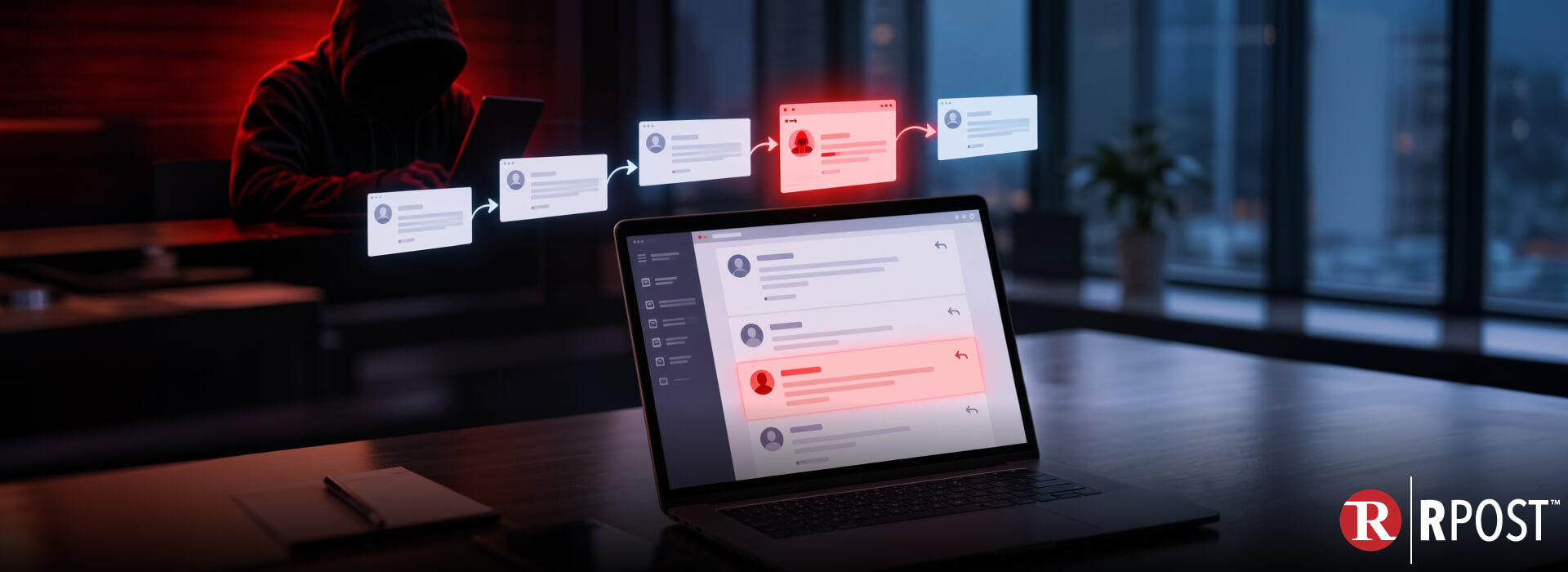
Instead of creating fake addresses, criminals access genuine mailboxes and observe ongoing conversations. They learn when invoices are expected, which projects are active, and how employees communicate.
When the opportunity arises, they insert fraudulent instructions into an existing email thread.
Because these messages come from authentic accounts, conventional sender authentication may not flag them. An attacker could change payment details, introduce a fraudulent document, or redirect confidential information without raising immediate suspicion.
What businesses should do
Enterprises should combine account protection with behavioral monitoring to identify unusual mailbox access, suspicious forwarding rules, and changes in communication patterns.
Security teams should also investigate signs of unauthorized observation. The fraudulent reply may be the final stage of an attack that began weeks earlier. Identifying that initial compromise creates an opportunity to intervene before financial or data loss occurs.
Related reading: Email Reply Chain Attacks: Why Compromised Threads Are So Hard to Detect.
Credential phishing remains a major entry point for email account compromise, but attackers increasingly target more than passwords.
Fraudulent replicas of Microsoft 365 and other enterprise login pages capture credentials, while adversary-in-the-middle (AiTM) techniques can intercept authentication sessions and steal tokens, potentially bypassing some forms of multifactor authentication.
Phishing-as-a-service platforms have made these attacks easier to execute.
In September 2026, Microsoft reported that the EvilTokens platform was associated with more than 12,000 compromised inboxes across over 10,000 organizations. It also incorporated AI capabilities for phishing operations and compromised-inbox analysis.
Once inside, attackers can examine confidential communications, study supplier relationships, and launch further attacks using trusted accounts.
What businesses should do
Enterprises should prioritize phishing-resistant authentication, including FIDO2 security keys and passkeys where supported. Strong session monitoring, conditional access policies, and prompt revocation of suspicious sessions are equally important.
Employee awareness helps, but security controls must also assume that credentials or active sessions can be compromised.
QR code phishing, or quishing, allows attackers to hide malicious destinations inside images rather than conventional hyperlinks.
Recipients scan a QR code in an email or attachment and are directed to fraudulent login pages. The interaction may shift from a managed corporate device to a personal smartphone, where enterprise protections differ.
Microsoft identified QR phishing as the fastest-growing attack vector during the first quarter of 2026.
Attackers also use legitimate cloud services, redirects, and calendar invitations to create multi-stage phishing campaigns. The initial email may appear harmless, while the malicious interaction occurs several steps later.
What businesses should do
Security teams should assess whether their email protection tools inspect QR codes, attachments, and redirected destinations. Employee awareness programs should address mobile phishing and unexpected authentication requests.
The critical lesson is that an apparently safe initial message does not guarantee a safe interaction.
AI phishing is changing how quickly attackers can build convincing campaigns.
Previously, personalized attacks required extensive research and manual preparation. Generative AI can now accelerate target research, adapt messages to different roles, and produce convincing content across languages and regions.
A finance executive in Mumbai and a procurement manager in Singapore may receive completely different messages, each tailored to their business context.
Unlike BEC, which often targets financial transactions, AI-powered phishing can support credential theft, confidential data disclosure, malware delivery, and unauthorized access.
The real danger is not better-written phishing emails. It is the ability to create credible deception at scale.
What businesses should do
Awareness programs must move beyond teaching employees to recognize spelling mistakes and poor grammar.
Employees should question unexpected requests involving credentials, financial changes, sensitive documents, or unusual permissions, regardless of how professional the message appears.
Behavioral analytics and identity intelligence should complement these efforts, helping security teams recognize suspicious activity that polished language may conceal.
Enterprises invest heavily in securing their own systems, yet significant email security risks can originate from suppliers, customers, legal advisers, accountants, and business partners.
An attacker who compromises a supplier's mailbox can observe customer conversations, identify upcoming transactions, and exploit trusted relationships.
The challenge is that third-party security lies outside the organization's direct control.
Traditional vendor assessments, questionnaires, and periodic reviews remain important, but they offer limited visibility into compromises occurring between assessments.
A supplier that passed its last security review may still become a source of risk tomorrow.
For organizations in banking, healthcare, insurance, and other regulated industries, the consequences can include financial fraud, sensitive data exposure, and operational disruption.
What businesses should do
Organizations should treat third-party email interactions as an ongoing source of risk intelligence, not simply rely on periodic vendor assessments.
Monitoring unusual external communication activity, independently verifying sensitive requests, and establishing clear escalation procedures can help identify compromised relationships.
The key question is whether the organization can recognize suspicious activity involving a trusted partner before that trust is exploited.
A new email security threat is emerging as enterprises increasingly use AI assistants to summarize messages, retrieve attachments, draft responses, and support business workflows.
Email is no longer just information for employees to read. It can also become input that influences an AI system's actions.
Attackers can exploit this through indirect prompt injection, embedding malicious instructions in emails intended to manipulate the AI assistant processing them.
For example, a message could attempt to make an assistant ignore its instructions, disclose confidential information, or initiate an unauthorized action.
The risk increases when AI agents have access to internal documents, business applications, and automated workflows. Unlike conventional phishing, the attacker may not need an employee to click anything. The AI system itself becomes the target.
What businesses should do
Enterprises should establish clear boundaries between untrusted email content and instructions governing AI systems.
AI agents should operate with limited permissions, while sensitive actions require appropriate authorization. Security teams should also test AI-enabled workflows for prompt injection vulnerabilities and monitor automated activities.
As AI adoption expands, email security and AI governance must work together.
These seven threats highlight a common weakness: the most dangerous part of an attack may occur outside the moment an email security gateway inspects a message.
A supplier mailbox may be compromised weeks before payment fraud occurs. A stolen session may enable attacks from an authenticated account. An AI assistant may encounter malicious instructions only after delivery.
Traditional defenses remain essential. SPF, DKIM, DMARC, anti-phishing tools, and attachment scanning all contribute to email protection. However, sender authentication cannot establish whether a legitimate account has been compromised, and gateway inspection cannot always reveal earlier reconnaissance or suspicious activity.
For security leaders, the priority is to extend visibility across the attack lifecycle, connecting signals from identities, communications, third-party interactions, and sensitive content activity.
Effective protection increasingly depends on detecting unusual behavior and acting before it leads to a damaging incident.
RPost addresses this challenge by combining secure business communications with AI-driven threat intelligence through RMail and RAPTOR™ AI.
Rather than focusing exclusively on malicious messages at the gateway, RAPTOR AI's Eavesdropping AI™ capabilities are designed to identify suspicious activity patterns that may indicate unauthorized observation or compromise of business communications.
This intelligence is particularly relevant to compromised supplier accounts and reply-chain attacks, where criminals may monitor legitimate conversations before attempting fraud.
RPost's PRE-Crime™ approach emphasizes recognizing early indicators of attacks and taking action before the final malicious event. RAPTOR AI also incorporates Double DLP™ for pre-delivery protection and AI Auto-Lock™ for supported post-delivery content controls, helping organizations manage sensitive information exposure across different stages of communication.
These capabilities complement existing identity security, authentication, and endpoint defenses rather than replace them.
For CISOs, the focus shifts from asking whether malicious emails can be detected to understanding whether suspicious third-party activity, potential compromise, and emerging threats can be recognized early enough to limit their impact.
As attackers exploit legitimate identities, trusted business relationships, and AI-enabled workflows, enterprises need a layered approach that combines prevention, intelligence, and timely intervention.
Four priorities deserve particular attention:
Gateway security, identity protection, behavioral monitoring, and content security address different stages of an attack. Their combined effectiveness matters more than relying on any single control.
Email remains central to enterprise operations, connecting employees, suppliers, customers, partners, and increasingly, AI-powered business systems.
Attackers are exploiting these relationships through compromised accounts, established conversations, and automated deception. The fraudulent email may be only the final step of an attack that began much earlier.
For enterprises, stronger email security means recognizing suspicious activity sooner, reducing opportunities for exploitation, and limiting the damage when attacks succeed.
Explore how RPost's RMail and RAPTOR AI help enterprises identify suspicious communication activity, strengthen protection against emerging email threats, and gain greater visibility into risks involving trusted business relationships.
October 29, 2026
October 07, 2026
September 30, 2026
September 25, 2026

September 18, 2026


 Cybersecurity Insights
