




Rocky the Raptor here, RPost's cybersecurity product evangelist. I've been thinking about spies lately. Not the ones in dark sunglasses exchanging briefcases on park benches, but the ones quietly operating inside compromised email accounts, studying business conversations, learning who trusts whom, and waiting for the right moment to strike.
Rocky the Raptor here, RPost’s cybersecurity product evangelist. I've noticed something interesting about cybersecurity conversations. Nearly everyone believes their organization is reasonably secure. Maybe not perfectly secure, but certainly more secure than some of the suppliers, customers, law firms, consultants, and other third parties they communicate with every day. And that's probably true for many organizations.
Rocky the Raptor here. After enough conversations with CIOs, CISOs, and security leaders, I keep coming back to one problem that may be more consequential than all the discussion about whether AI makes phishing better, malware smarter, or attackers more productive.
Rocky the Raptor here, RPost’s cybersecurity product evangelist. I noticed something interesting in conversations with CISOs at the recent Gartner Security & Risk Management Summit in London this week: everyone has plenty of security tools, but the questions are increasingly about the data itself. Where is it? Who can actually access it? What can AI read? Where has it been copied? And perhaps most importantly, what control remains once that data begins moving?

Last week, I told you the signature was never really the point. Rocky the Raptor here again, RPost’s product evangelist, continuing our conversation about where eSignatures are heading. At the time, we were watching the market shift from simply capturing a signature to managing everything that happens around it. Well - the next chapter has arrived...
RPost today announced it has been named a Leader in the IDC MarketScape: Worldwide Integrated Signing Workflow Software 2026 Vendor Assessment, marking another milestone in RPost’s more than two decades of innovation in electronic signatures, digital transactions, security and workflow automation.

Rocky the Raptor here. I have a confession from someone who has spent a lot of time around electronic signatures: the signature was never really the point.
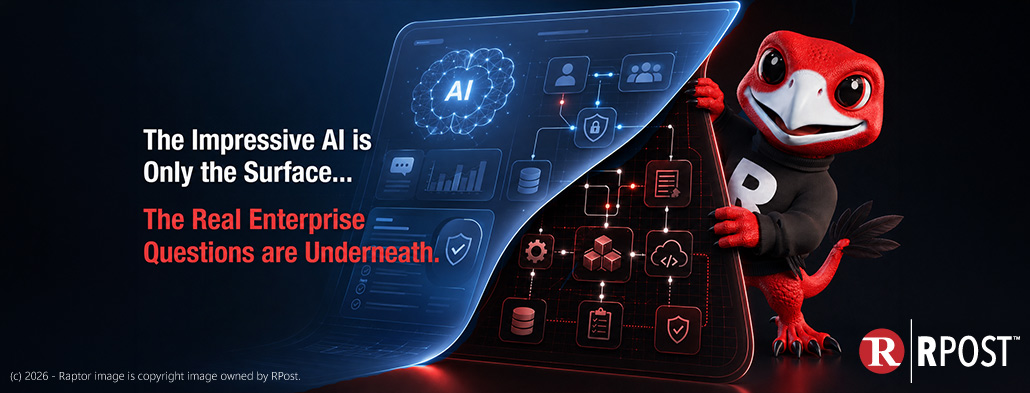
Rocky the Raptor here, RPost's cybersecurity product evangelist. I've noticed something interesting in conversations our teams are having with CIOs, CISOs, and technology managers lately: the AI demo is more nuanced.
There is something wonderfully Silicon Valley about telling investors your addressable market is roughly the size of the U.S. economy. Anthropic is reportedly preparing to do just that.
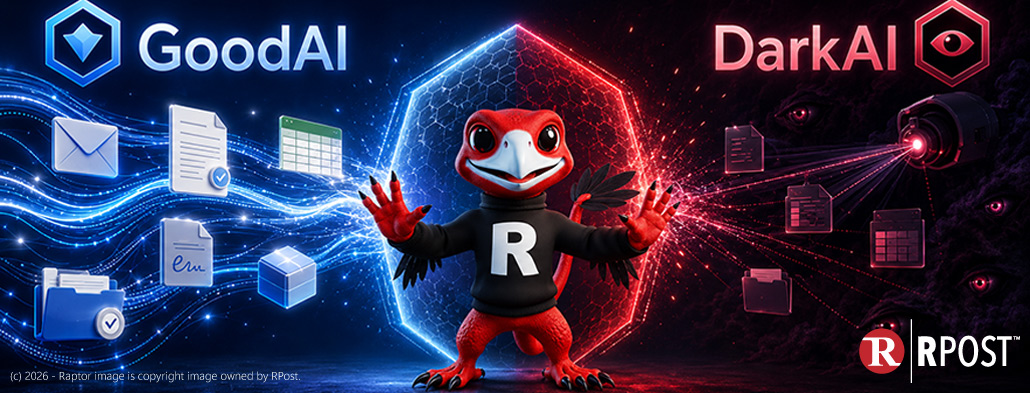
Rocky the Raptor here, RPost’s cybersecurity product evangelist, and I feel that the modern information worker has become the soft center of the digital economy.
October 16, 2026
October 09, 2026
October 02, 2026
September 25, 2026
September 18, 2026