



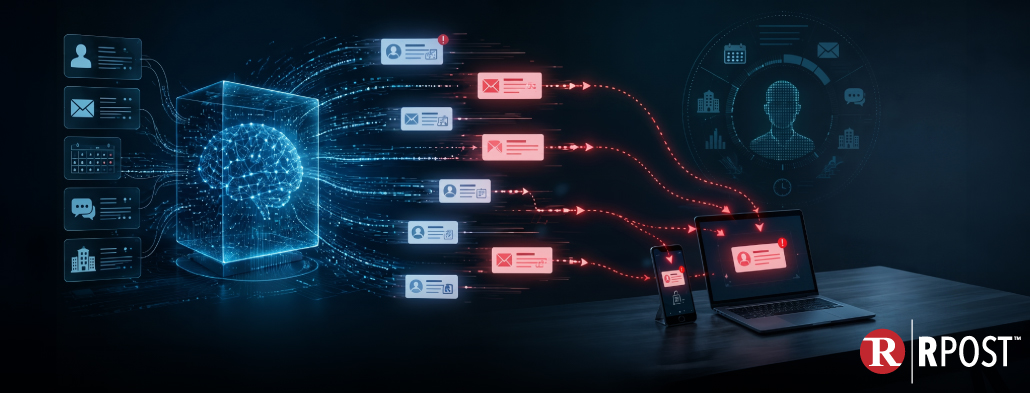
Attackers no longer need large teams, fluent writers, deep regional knowledge, or weeks of manual research to create convincing attacks. AI helps them draft better lures, localize messages, study targets, imitate tone, and scale campaigns faster.
That is why AI-powered cyberattacks are different. They are cheaper to launch, faster to adapt, and more personal at the human level. For enterprises, this changes the threat model from “spot the obvious fake” to “detect the buildup before the lure lands.”
Traditional cyberattacks often showed clues: poor grammar, odd formatting, generic messages, wrong timing, or weak personalization.
AI reduces many of those clues.
A cybercriminal can now create a polished phishing email in seconds. They can rewrite it for a CFO, legal counsel, vendor manager, HR leader, or regional finance team. They can translate it into local language, match business tone, and test several versions quickly.
The result is a new attacker advantage:
| Old Attack Model | AI-Powered Attack Model |
| Manual research | Automated reconnaissance |
| Generic phishing | Role-based targeting |
| Poor writing | Polished business language |
| Slow lure creation | Fast message testing |
| Limited scale | High-volume personalization |
| Obvious fraud signals | More believable deception |
This does not mean every AI-assisted attack is advanced. Many are still simple. The problem is that simple attacks now look better, move faster, and require less effort to produce.
Cybercrime has always followed economics. Attackers look for the lowest effort path to the highest return.
AI lowers the cost of that effort.
A criminal no longer needs a fluent writer to craft a vendor payment request. They can ask AI to write it in a calm business tone. They do not need to know the local language well. AI can translate and localize the message. They do not need to manually rewrite dozens of lures. AI can create variations for different roles and regions.
This matters because lower cost means more attempts.
Attackers can create more phishing emails, more impersonation messages, more fake vendor requests, more account takeover follow-ups, and more business email compromise lures with less time and fewer people.
For defenders, volume is only part of the issue. The bigger concern is quality at scale. When more attacks look credible, human review becomes less reliable.
AI also compresses the time between research, lure creation, testing, and execution.
An attacker can study a company’s website, leadership pages, job posts, vendor ecosystem, press releases, LinkedIn activity, and public communications. AI can help summarize that information and turn it into a targeted message. And this shortens the attacker lifecycle.
A lure that once took hours to research and write can now be drafted, refined, and adapted much faster. If one version does not work, attackers can quickly create another. If a target changes roles, posts a new update, or appears in an event announcement, that context can be folded into the next message.
This speed matters because security teams often rely on review queues, escalation paths, and user reporting. Those processes can be too slow when attackers can test and adapt quickly.
The most dangerous shift is personalization. It helps attackers create messages that feel tied to the recipient’s role, timing, business context, and current priorities.
A finance leader may receive a message that sounds like a vendor payment follow-up. A legal team may see a contract review request. A sales operations team may get a CRM export request. An HR leader may receive a candidate or payroll-related message. A security analyst may receive a fake escalation note that sounds operationally valid.
These lures work because they do not depend only on technical compromise. They exploit business rhythm.
AI makes that easier by helping attackers turn public or stolen context into believable communication. The message may reference the right department, the right business process, the right tone, or the right urgency.
This is where third and fourth parties become especially risky. Attackers may study vendors, partners, consultants, brokers, suppliers, or service providers to understand how they communicate with the enterprise. Once they know the pattern, they can create lures that look like normal business traffic.
AI-powered cyberattacks show up in familiar forms, but with better execution.
Phishing becomes more polished. Spear phishing becomes easier to personalize. Business email compromise becomes more contextual. Impersonation scams become harder to spot. Deepfake-enabled fraud adds voice and video pressure to written deception. Account takeover becomes more dangerous because AI can help attackers write follow-up messages that match the compromised user’s role and tone.
AI-assisted reconnaissance may be the quietest part of the problem. Before the attack arrives, criminals may already be studying business relationships, transaction patterns, communication habits, vendor dependencies, and exposed third-party signals.
That early buildup is where many organizations have limited visibility.
They see the email when it arrives. They may detect the malicious link. They may block the attachment. But the real attack path may have started earlier, when criminals were gathering the context needed to make the lure believable.
Security awareness still matters, but AI weakens some of the cues people were trained to notice.
Employees were told to look for bad grammar, strange wording, odd formatting, and obvious urgency. AI can clean up the grammar, improve the tone, and make the request sound like normal business.
People also trust messages that match their workflow. A request that appears to come from a vendor, colleague, manager, or known business process may not feel suspicious, especially when the language is polished and the timing feels plausible.
Manual approval chains also struggle with speed. A finance team may review a payment request. A legal team may review a document. A security team may inspect a reported email. But AI-assisted attackers can move quickly, adjust quickly, and create several convincing versions.
This is why the burden cannot sit only on employees. Defenses need to recognize risk earlier in the chain.
AI-powered cyberattacks increase risk in three ways.
First, they raise attack volume. More credible lures can be produced with less effort.
Second, they increase deception quality. Messages can be written for specific roles, industries, regions, and business processes.
Third, they reduce response time. Security teams may have less time to identify, escalate, and contain the threat before users act.
The impact can include credential theft, account takeover, financial fraud, sensitive data exposure, vendor compromise, compliance issues, and reputational damage.
The bigger enterprise concern is that these attacks often move through trusted communication channels. Email, documents, vendor messages, and third-party workflows become the attack path.
CISOs need to shift from only detecting bad messages to spotting the conditions that make personalized attacks work.
That starts with preemptive cybersecurity.
The goal is to reduce exposure before the attacker’s lure succeeds. This means looking earlier at reconnaissance signals, third-party risk, abnormal communication patterns, impersonation indicators, unsafe outbound data movement, and suspicious behavior around business workflows.
Security teams should focus on five practical actions.
A polished message is no longer a trust signal. Teams should verify sender identity, context, request type, and business legitimacy before acting on sensitive requests.
Sensitive emails, documents, approvals, and business-critical exchanges need stronger proof, tracking, and control. This is especially important when third parties are involved.
If a user reports a suspicious message, the path to review and containment should be fast. Slow response gives AI-assisted attackers more room to adapt.
Security teams should look for unusual sender behavior, suspicious recipient activity, strange access patterns, and communication changes across known relationships.
The most useful signal may appear before the final phishing email. Reconnaissance, vendor exposure, compromised third-party accounts, and suspicious ecosystem behavior can indicate that an attack is forming.
This is where RPost’s RAPTOR AI can be positioned naturally. RAPTOR AI supports preemptive cybersecurity by helping teams recognize risk earlier, reduce exposure in communications, and act before personalized attacks have room to succeed.
Many AI-powered attacks do not begin inside the enterprise. They begin around it.
Attackers may study vendors, customers, brokers, suppliers, consultants, law firms, accountants, or managed service providers. These third parties often hold valuable context: who communicates with whom, what documents are shared, what payments are expected, what approvals are normal, and what tone is used.
Fourth parties add another layer. A vendor’s vendor may be the weaker point that gives attackers enough context to build a convincing lure.
This is why enterprises need visibility beyond their own inboxes and endpoints. The attacker may be preparing from outside the perimeter, using exposed or compromised external relationships to create a message that looks legitimate when it reaches the enterprise.
Use this as a practical starting point:
AI-powered cyberattacks are changing the economics of cybercrime.
They make attacks cheaper to create, faster to scale, and more personal to the recipient. That makes phishing, impersonation, business email compromise, and social engineering harder to detect through human judgment alone.
For CISOs, the response is not only more awareness training or more post-incident detection. The better approach is earlier risk recognition, stronger communication controls, faster escalation, and better visibility into the third-party context attackers use to build believable lures.
The attack is becoming more personal. Defense needs to become more preemptive.
See how RPost helps teams reduce exposure to faster, more personalized cyber threats.

October 07, 2026

September 30, 2026
September 25, 2026

September 18, 2026

August 20, 2026





 Cybersecurity Insights