


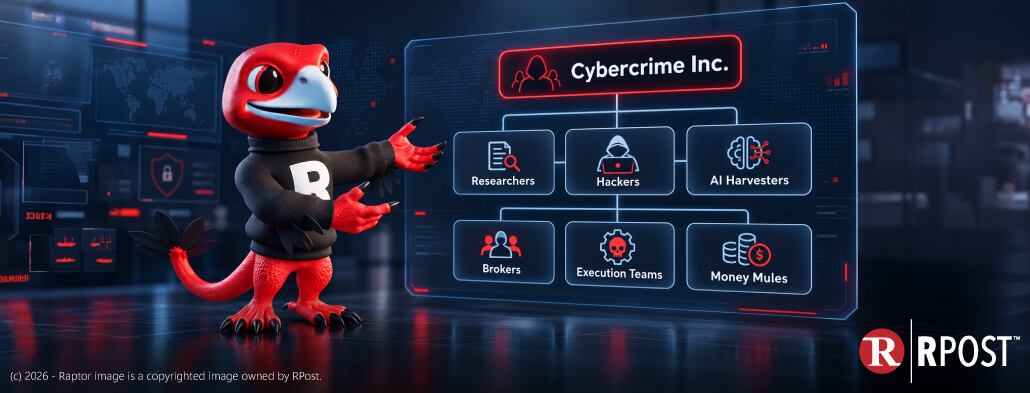
Rocky the Raptor here, RPost's Cybersecurity AI Product Evangelist. I've been watching how the business of cybercrime is evolving, and this week's headlines offer a striking example. What does a potential $6.3 billion cryptocurrency heist tell us about the future of cybercrime? Quite a lot, apparently.
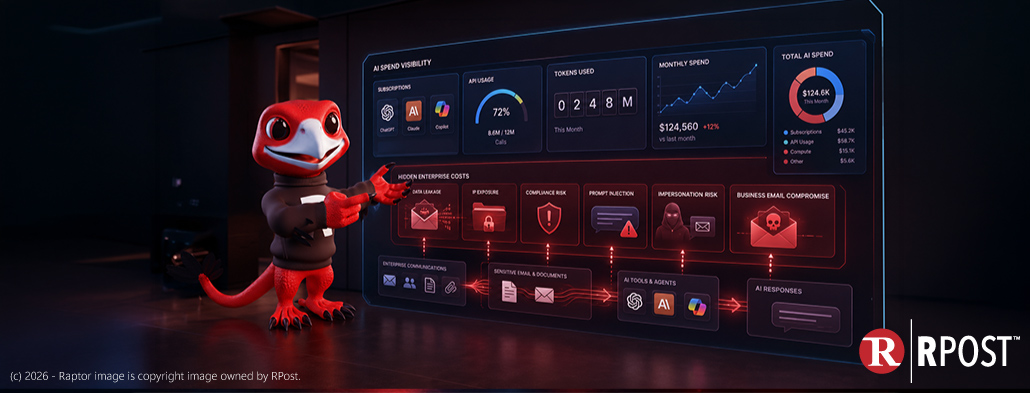
Ask a CFO what AI costs and you'll probably get an answer measured in subscription fees, API consumption, or monthly token budgets - $20 a month for an individual assistant, enterprise licenses for Microsoft Copilot or Claude, or API charges based on tokens consumed.
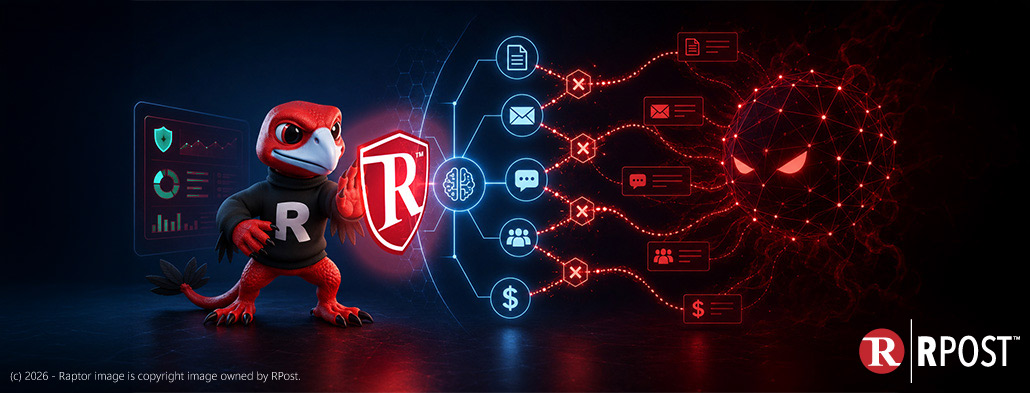
Rocky the Raptor here, RPost’s cybersecurity product evangelist. For years, cybersecurity strategy centered on one objective -- keep the bad guys out by building stronger firewalls, blocking phishing emails, detecting malware, and responding quickly when something slipped through.
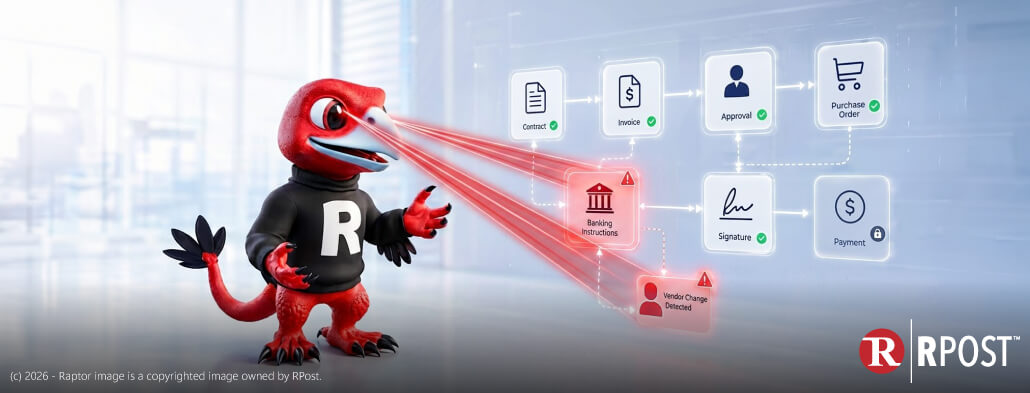
For much of the past decade, digital transaction management has been viewed primarily through the lens of efficiency. Organizations adopted electronic signatures, workflow automation, and digital document exchange technologies to eliminate paper, accelerate approvals, reduce operational costs, and improve customer experiences. The business case was straightforward: move transactions faster, reduce friction, and create a more agile enterprise.

Rocky the Raptor here, RPost’s cybersecurity product evangelist. Let me tell you the story of a real estate transaction that could have possibly ended in BEC/wire or escrow fraud. Though I’ve got eyes sharper than a closing attorney reviewing a title commitment, I admit this one almost slipped through the cracks!
October 30, 2026

October 23, 2026

October 16, 2026

October 09, 2026

October 01, 2026


