



There is something wonderfully Silicon Valley about telling investors your addressable market is roughly the size of the U.S. economy. Anthropic is reportedly preparing to do just that. The Claude maker sees more than $30 trillion in potential annual revenue opportunity from work artificial intelligence could ultimately perform. That is not a $30 trillion valuation -- an important distinction -- but Anthropic is separately reported to be considering an IPO at around a $2 trillion valuation.
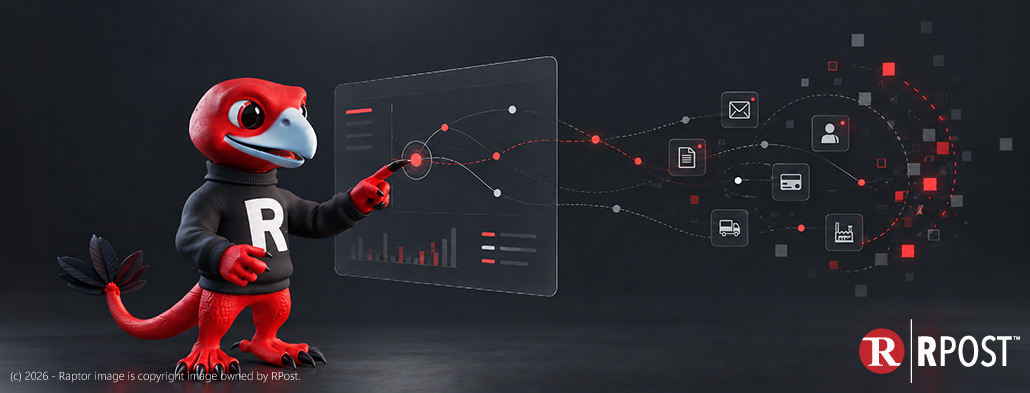
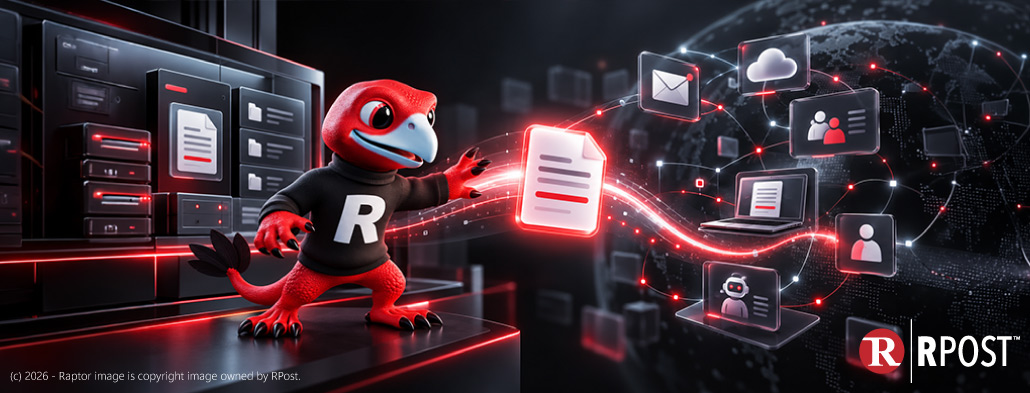
Rocky the Raptor here, RPost’s AI product evangelist, with a few trending thoughts.
On the Anthropic claim, it is an extraordinary vision. Yet there is an awkward countertrend developing inside the very enterprises expected to finance it: many CIOs are trying to make sure they never become completely dependent on Anthropic, OpenAI, Google or any other closed-model provider.
There are two obvious reasons.
The first is economics. Once a business process is deeply dependent on one model, switching becomes difficult. Today's attractive token economics can become tomorrow's strategic dependency, particularly as AI moves from occasional employee queries to millions of automated agent interactions.
The second issue may be more consequential: information sovereignty.
The more useful enterprise AI becomes, the more proprietary context companies must give it. Litigation strategy, pricing formulas, customer histories, software code, acquisition plans, product roadmaps, engineering designs and internal communications are precisely the data that make AI valuable. They are also precisely the information companies least want outside their control.
This is one reason open models are becoming strategically interesting.
Instead of continually sending proprietary information to a frontier-model provider, a company can increasingly download an open-weight model, adapt it for its own needs and run it on infrastructure it controls. For large or predictable workloads, the appeal isn't simply lower cost. It is optionality. The enterprise controls the model environment, the data boundary and, importantly, its negotiating leverage.
Nvidia's reported $12.9 billion agreement to acquire Hugging Face may be the clearest evidence yet that open models are moving from the AI fringe toward the mainstream. Hugging Face has effectively become a GitHub-like hub for open AI models, datasets and development tools. The Information reports that Nvidia views a thriving open-model ecosystem as a counterweight to closed-model companies such as Anthropic and OpenAI.
That strategy makes particular sense for Nvidia.
Nvidia doesn't necessarily need one model to win. It needs enormous amounts of AI to run. If thousands of companies can download capable models rather than rent intelligence exclusively from a handful of closed-model providers, those companies still need GPUs to run them. More open models can mean more experimentation, more private deployments, more enterprise inference -- and potentially a larger market for Nvidia hardware. It is an elegant position: promote openness at the model layer while selling the scarce computing machinery underneath it.
There is also another strategic consideration. Google and major hyperscalers are developing their own AI chips precisely to reduce dependence on Nvidia. Supporting a healthy open-model ecosystem gives Nvidia a hedge against a future in which a few vertically integrated model companies increasingly control both the intelligence and the hardware.
For CIOs, this raises a larger infrastructure question. If companies increasingly run their own models, do they rent the computing power from AWS, Microsoft Azure or Google Cloud? Perhaps. The cloud providers can simply move the meter one layer down—from charging indirectly for intelligence to charging for GPUs, memory, storage and inference infrastructure.
Which raises a question CIOs haven't had to seriously contemplate for years: What if the cloud becomes too expensive precisely because AI becomes too important?
But sufficiently large AI users may eventually ask another uncomfortable question: if our GPU workloads are enormous and predictable, why are we renting the hardware forever?
That could make an old idea surprisingly fashionable again.
Own the servers. Put them in a colocation facility. Pay someone else for connectivity, cooling, electricity and physical security. Keep the models and sensitive information inside an environment whose architecture and economics you control.
That isn't the death of cloud computing. Nor is open AI likely to kill Claude or ChatGPT. The more likely architecture is hybrid. Companies will use the best frontier models when their additional intelligence justifies the cost, open models for workloads where privacy, customization or economics matter more, and perhaps several infrastructure providers underneath them.
The strategic change is that enterprises will increasingly resist having model, data, compute and economics controlled by the same outside party.
And data may be the issue that ultimately drives the architecture.
AI wants context. The more context it receives, the smarter it becomes. But the same corporate information that makes an AI agent exceptionally useful can make disclosure exceptionally damaging.
That is why AI-era cybersecurity increasingly needs observability as well as traditional protection. RPost's RAPTOR™ AI approach, for example, focuses on AI-era threat defense and AI Observability around communications and content—helping enterprises understand when AI is interacting with sensitive business information and where those interactions create new exposure.
So, will information privacy be the death knell of Anthropic?
Almost certainly not. Anthropic may become one of the world's most valuable companies. But the more interesting $30 trillion question is whether enterprises will be comfortable renting more and more of their intelligence from a small number of providers while simultaneously handing those providers increasingly valuable corporate context.
If they are not, AI may produce one of technology's stranger reversals: the world's most advanced software could help bring back open models, privately controlled data and rows of company-owned servers sitting in racks.
Sometimes the future looks surprisingly like the past.
October 01, 2026
September 25, 2026

September 18, 2026
September 16, 2026

September 11, 2026





 Blog
Blog