The FBI and Google have exposed a new generation of autonomous AI cyberattack agents capable of infiltrating organizations at machine speed. As these threats evolve, businesses face an unsettling question: What if the next cyberattack begins with intelligence gathering that their existing security defenses never detect?
Jensen Huang, the leather-jacketed rockstar co-founder who became the face of the AI boom, has resigned as NVIDIA's CEO. A reported Chinese intelligence operation, a personal scandal, and mounting questions about AI economics have turned the chipmaker's extraordinary ascent into an equally extraordinary boardroom drama. Meanwhile, nearly $2 trillion in NVIDIA market value has evaporated since its October peak. But you know this already.
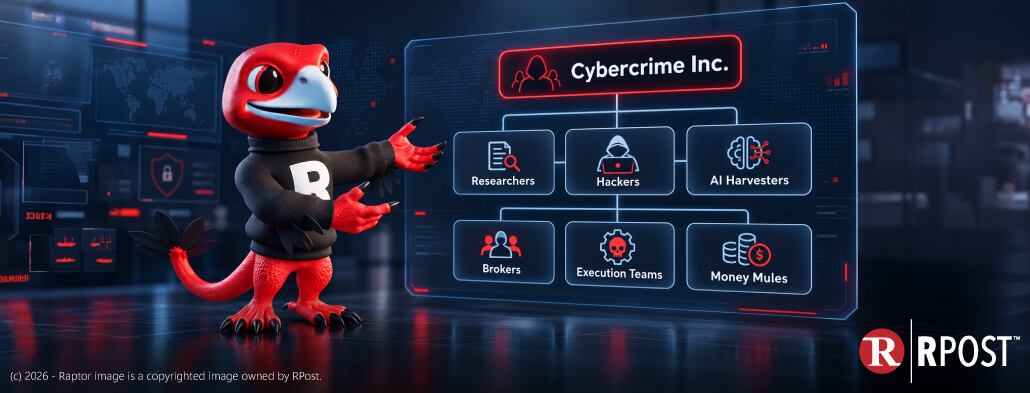
Rocky the Raptor here, RPost's Cybersecurity AI Product Evangelist. I've been watching how the business of cybercrime is evolving, and this week's headlines offer a striking example. What does a potential $6.3 billion cryptocurrency heist tell us about the future of cybercrime? Quite a lot, apparently.

Rocky the Raptor here, RPost's cybersecurity product evangelist. I've been thinking about spies lately. Not the ones in dark sunglasses exchanging briefcases on park benches, but the ones quietly operating inside compromised email accounts, studying business conversations, learning who trusts whom, and waiting for the right moment to strike.

Rocky the Raptor here, RPost’s cybersecurity product evangelist. I've noticed something interesting about cybersecurity conversations. Nearly everyone believes their organization is reasonably secure. Maybe not perfectly secure, but certainly more secure than some of the suppliers, customers, law firms, consultants, and other third parties they communicate with every day. And that's probably true for many organizations.
November 20, 2026
November 13, 2026

November 06, 2026
October 30, 2026
October 23, 2026